Read below to learn more about the differences between initial training and post-PPL instruction, and the important things that you need to look out for after getting your PPL.
For great pilots, Private Pilot Licence (PPL) training is an ongoing process, but there are clear distinctions during the initial phase of training and post-PPL instruction that you will need to know if you want to understand how the PPL programme works.
The initial training phase can be slow and tedious, and may be jarring for newcomers, especially for people who aren’t passionate about flying. Even for enthusiasts who start fresh, the initial phase of training can take some getting used to.
However, after you get your licence and get accustomed to the aviation life, you will begin to absorb instructions more efficiently and have fun while expanding the limits of your PPL.
Read below to learn more about the differences between initial training and post-PPL instruction, and the important things that you need to look out for after getting your PPL.
Initial Training and What to Expect
In the UK, initial training follows the syllabus set by the UK Civil Aviation Authority (CAA) and is conducted at an Approved Training Organisation (ATO) or Declared Training Organisation (DTO) such as Sherburn Aero Club.
Initially, pilots are introduced to structured training that helps them follow a clear path to their licence.
Private pilot training involves ground school training where pilots are taught theoretical subjects that help them understand and better anticipate the practical exercises that they will take later in their journey.
Ground school training goes over nine mandatory subjects. These subjects range from air law to human limitations, meteorology, and navigation, and help the pilot learn the fundamentals of flight principles in aviation.
In tandem with ground school training, pilots will also be introduced to basic flight training, where they will be put inside a cockpit for more hands-on learning.
Practical lessons are designed to help pilots figure out basic flight handling, navigation, and even emergency procedures.
Typically, pilots will need to master several practical lessons that involve the following:
- Stalls
- Circuits
- Forced landings
- Navigation flights
- Cross-country qualification (end of training)
- First solo flight (end of training)
Post-PPL Instruction
For PPL holders, they must remain active, keep learning new things, and gain experience as a Pilot-in-Command so that they can get the most out of their licence during the post-PPL instruction phase.
After you get your licence, you will have the freedom to expand your licence however you like. For most pilots, a simple PPL is enough, where you can enjoy the perks of flying whenever you want, as per VFR conditions.
However, if you want to expand the capabilities of your licence, then the best way to go about it is to go for advanced training in the form of certifications and qualifications.
Post PPL instruction is generally easier since you are already exposed to and have experience with structured learning. You will follow more or less the same learning format going forward, which makes it easier for pilots to quickly progress ahead.
Here is what Post-PPL Instruction might look like for you:
Shifting from Hour Building to Qualifications
Initially, you will be focusing on building hours and gaining enough flight experience to fulfil the minimum hourly requirement for your PPL. Keep in mind that while the minimum requirement is 45 hours, most pilots strive to accumulate at least 60 hours before they consider themselves fly-worthy.
Shifting from an hour-building mindset to being certification-focused is perhaps the change that you will notice from initial training to post-PPL instruction. Many pilots, even if they want to pursue aviation as a hobby, tend to go for more certifications because it allows them to increase the capabilities of their licence.
This means that they fly in various conditions outside of Visual Flight Rules, which are a set of rules that highlight the weather conditions during daylight for private pilots to fly aircraft. They will also have the option to go for a more serious licence, like the CPL, if they wish to do so in the future.
Night Rating
Night rating allows pilots to operate aircraft after dark. This certification expands the capabilities of your licence and enables you to fly outside of VFR conditions, giving pilots more freedom.
To be eligible for a night rating, you will have to log at least 5 hours of flight training, which includes topics such as navigation, communication, and circuits. Keep in mind that you will probably have to go for at least 10 to 15 hours to get a better understanding of flying after dark. However, the biggest benefit here is that post-PPL instruction is relatively easier, so you will be able to breeze through the lessons.
Instrument Rating
Similar to the Night Rating, Instrument Rating, also called an IR, allows pilots to fly outside of VFR conditions as well. The difference is that the IR is aimed at training pilots on how to fly without relying on sight. This means that you can fly aircraft in a wider range of weather conditions.
For example, during fog, rain or snow, regular PPL holders will need to stay grounded until the weather clears, and visibility is restored to normal. However, if you have an instrument rating, you can use the various onboard instruments to fly without visual aid.
The IR expands the capabilities of your licence and also opens more flying opportunities! To apply for an instrument rating, you will need to log additional flight hours and go through the required ground school training as well as pass all the theory and practical tests.
It is important to note here that while the IR enables pilots to fly in various weather conditions, you will not be allowed to fly if the weather is particularly bad, such as during a snowstorm, hailstorm, hard rain, or lightning storms.
Multi-Engine Piston Rating
For pilots who want to evolve their training, an MEP rating qualifies private pilots to fly aircraft with more than one engine.
An MEP opens new flying opportunities and is also excellent for thrill seekers looking to fly larger and more powerful aircraft. The MEP is also a solid building block for advanced training programmes that you may opt for in the future. For example, the MEP is essential for progressing to commercial or airline careers if you choose to go for a CPL later.
Flight Instructor Rating
Private pilots who enjoy teaching as much as flying may benefit more if they go the instructor route. Most experienced pilots enjoy the process of teaching and enabling the next generation to fly. If this is you, then there is no better way to start than to become a flight instructor.
Teaching is generally a rewarding experience, but a flight instructor takes the reward aspect to the next level since you will be witnessing your students learn how to fly from scratch. Trust us, watching young people take on a challenge and overcome obstacles to fly is like nothing else!
Apart from the rewards, there is another huge benefit of becoming an instructor: all your flight hours are logged. This means that you will be building flight hours while getting paid in the process. You will also have a pulse on the aviation industry and experience the industry from behind the scenes, offering a rare and exciting perspective that will add to your experience.
Some pilots find the transition to becoming an instructor easier in the post-PPL instruction phase. To become an instructor, you will require 30 hours of flight instruction on various topics such as teaching techniques, ground school training, and skill exams.
Once you become an instructor, you will be able to get employed by flight schools and build your career from there.
Airline Transport Pilot Licence
If you are looking for a challenging route during your post-PPL instruction phase, then we recommend you check out the Airline Transport Pilot Licence (ATPL). The ATPL is required for becoming a captain for large airliners.
The ATPL serves as the proverbial ceiling of excellence in aviation and is the highest level of pilot certification that can enable you to command commercial airliners.
Of course, this will require you to transition from a private pilot licence to a CPL (more on this below). Keep in mind that the ATPL licence has a lot of strict requirements, and you will be required to achieve a minimum of 1500 hours of flight time, including PIC hours, while passing numerous exams and skill tests.
Aerobatic Rating
One of the best ways to get the most out of your licence and learn new, exciting things in flight training is to go for an Aerobatic Rating.
This rating is designed for thrill seekers and is an excellent way to further your skills. This qualification will teach you about the various complex aerial manoeuvres in aerobatics and is fantastic for pilots who want to take part in air events or aviation flying competitions.
An aerobatic rating isn’t just for show, though! This rating will also help enhance your handling skills and will give you a gigantic confidence boost to handle aircraft in multiple situations.
Post-PPL Instruction: Going From A PPL TO A CPL
A CPL is the best way to evolve your PPL training and build an aviation career. The thing that separates good pilots from the rest is that they are like sharks: they like to keep moving.
In fact, many pilots start with a PPL because they want to slowly build themselves up to obtain a CPL rather than going with a CPL programme from the get-go. This approach allows you to get a better understanding of the inner workings of aviation and experience structured learning more effectively.
Upgrading a Private Pilot Licence to a Commercial Pilot Licence is relatively easy since all you need to do is continue your training where you left off during your PPL phase.
Once you enrol in a CPL programme, you will have to take on additional courses in the CPL syllabus and log more flight hours. You will also get in-depth ground school training on the same topics that you are already familiar with.
Since a CPL requires a total of 200 hours to be eligible, you will be able to take your time to build your hours. For most pilots, this isn’t a problem at all because they can fly for leisure and rack up the hours at the same time.
Your initial PPL training will act as a cushion for you during your CPL transition. There will be no curveballs to slow you down, and you will be able to excel quickly during your post-PPL instruction phase.
It is important to note that you will also have to be even more physically fit if you intend to pursue a CPL.
The CPL licence requires a comprehensive medical certificate. This means that you will have to upgrade your Class 2 (PPL) medical certificate to a Class 1 medical certificate. Don’t worry, if you are enrolled at a great flight club, like Sherburn Aero Club, you can get through all these tasks under one roof!
Once you have the required documentation and flight hours, you can submit your application to the Civil Aviation Authority for a CPL.
Where can you train?
If you wish to advance your PPL with additional certifications and training, then you must go to a comprehensive flight school.
A flight school like Sherburn Aero Club can provide additional private pilot training, and you can choose from a fleet of well-maintained aircraft. Sherburn also has a licenced medical examiner (CME), so even if you decide to upgrade your PPL to a CPL, you get all these additional services under one roof.
For commercial pilots, Sherburn’s partner organisation, Advanced Flight Training, offers courses in CPL training, Multi-engine Piston Rating, and Night Rating. Sherburn also has a world-class faculty with all the necessary facilities (including simulation training) and amenities (like a café and common hall) to make advanced training not only easier but also fun.
Why choose Sherburn Aero Club?
Sherburn Aero Club, which has been operational since 1964, is the ideal place for most of your training and flying needs.
We cater to brand-new flyers who have just started their journey to the skies, as well as seasoned flyers who have been operating aircraft for decades.
We offer comprehensive PPL training as well as dedicated CPL training and the required experience for operating aircraft at night.
With a large fleet of new aircraft and an airfield refurbishment with new runways, hangars, and an extended clubhouse, we also offer a dedicated day-long Flight Radiotelephony Operator’s Licence (FRTOL) course for those wishing to get the certification, running on the first Sunday of every month.
Sherburn also offers pilot medicals to ensure a smooth journey going forward. For those who wish to experience the thrill of a flight for fun or to help fuel their aviation dreams, Sherburn offers experience flights for the newbie, as well as the veteran.
The flight experience option is also available for people who wish to take to the skies for special occasions, even if they aren’t into aviation in the long run.
In addition to that, if you are looking for a hangarage for your own aircraft, need servicing or repairs, want to buy a new aircraft or aviation equipment, or are just looking to enjoy and watch the aircraft, Sherburn Aero Club is the place to be.
Call us at 01977 682 674, email us at flightdesk@sherburnaeroclub.com, or message us via our online contact form for more information on private pilot licences (PPL), commercial pilot licences (CPL), and the differences between initial training and post-PPL instruction.
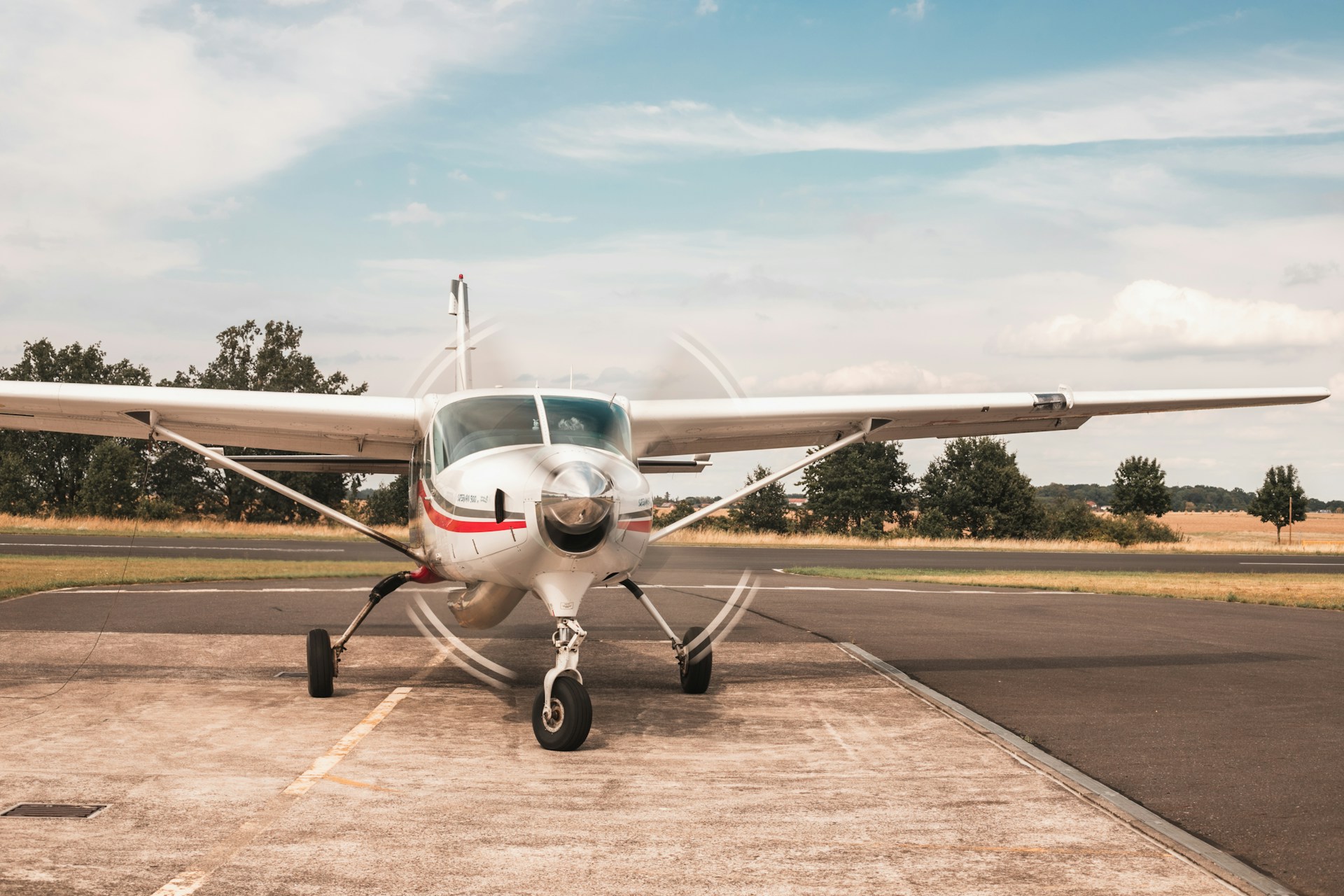
Photo by Kai Nachtigal on Unsplash