Read below to learn more about the LAPL and PPL, which one you should pursue first, and how to choose the right licence for how you will actually fly.
Pilot licensing may seem confusing, but it is actually very easy to understand if you narrow down your expectations in aviation and flight training.
There are three primary types of licences:
Out of these three, the LAPL and PPL are two of the most sought-after licences for enthusiasts. However, which one is the right licence for you and your flying needs?
Read below to learn more about the LAPL and PPL, which one you should pursue first, and how to choose the right licence for how you will actually fly.
Getting Into General Aviation
In simple terms, General Aviation or GA is a type of aviation that deals with all non-compensatory pilot licences. In other words, the LAPL and PPL fall under the category of general aviation because, for these licences, you cannot use your pilot training and skills for commercial purposes. Instead, you can only fly recreationally, as a hobby, and for general purposes.
The difference between General Licences and Commercial Licences, like the CPL, is that the Commercial Pilot Licence (CPL) allows you to fly an aircraft in exchange for monetary compensation. CPL pilots power modern aviation-based transportation around the world, and they enable the aviation industry to monetise its operations globally.
So, if you want an aviation career, then the CPL may be the right choice for you. However, if your main aim is recreational flying and you wish to pursue aviation as a hobby, then the LAPL and PPL are more than enough.
PPL or LAPL First? Choosing the Right Licence for How You’ll Actually Fly
Now that you know the difference between General and Commercial aviation, let’s focus on the LAPL and PPL licences.
Here is a guide to help prospective pilots decide which licence they should opt for first:
Understanding PPL and LAPL
The PPL is one of the most widely recognised recreational pilot licences around the world. With this licence, pilots can fly worldwide (depending on local rules), carry passengers, add additional ratings and certifications, and build hours to upgrade the licence in the future.
A PPL requires a minimum of 45 flight hours, and all students must obtain the minimum passing marks (75%) for all 9 theoretical knowledge exams. Furthermore, PPL candidates must also work towards obtaining a Class 2 medical certificate.
On the other hand, a LAPL is designed for pilots who want a streamlined training regimen that is simpler and more affordable.
LAPL pilots also fly recreationally and can operate single-engine piston aircraft that can carry up to three passengers. However, you will not be able to fly worldwide with this licence and will typically be limited to the UK.
A LAPL requires 30 hours of flight training, and like PPL training, candidates will need to pass 9 theory exams with relatively simplified topics compared to PPL ground school training.
The LAPL medical certificate is also easier to obtain since it only checks for the most important vitals of a pilot, like their eyesight, mental, and physical health. All these things make LAPL a generally easier-to-obtain licence.
There is a catch, though! The LAPL is not valid outside EASA-recognised regions, it has fewer upgrade options, and you will be more restricted and have fewer flexible aircraft privileges.
When the LAPL Makes Sense
Certain conditions may make LAPL more sensible for you.
The LAPL may be a good choice if you:
- Only want to fly locally for leisure only
- Expect to fly small aircraft with family or friends (up to 3 passenger limit)
- If you want lower training costs and quicker qualification
- Do not intend to pursue a professional aviation career
When the PPL Makes Sense
We recommend going with a PPL if you,
- Want the freedom to fly internationally
- Plan to add certifications or instrument ratings
- Might pursue commercial pilot training in the future
- Want access to a wider range of aircraft for recreational flying
The PPL is definitely the better long-term licence because it gives you a lot of flexibility and is highly modular in nature. This means that pilots who get into the PPL programme first will have more flexibility during and after their training compared to a LAPL, which is quicker to obtain but comes with several restrictions.
LAPL to PPL Upgrade
So, what if you want to start with a LAPL and then upgrade to a PPL later?
That is possible, but there are some considerations to keep in mind! First, the LAPL has more relaxed requirements than the PPL, which means that you will likely have to bear additional costs to upgrade your licence.
For example, the upgrade will require you to obtain a Class 2 medical certificate all over again, and you will also have to pursue additional training. This is why many flight schools in the UK encourage students to start with a PPL from the get-go.
People who train for LAPL usually don’t have the time, patience, or budget to pursue a more comprehensive licence like the PPL or CPL. These are people who may have day jobs and want to learn on the side using flexible hours.
PPL pilots know what they want in aviation and are excited to pursue the benefits that we have discussed above. By figuring out your expectations, you can narrow down your decision for choosing the right licence.
If you were to boil it down, here is how you can choose between the two:
- Go for the LAPL if you want to focus only on casual local flying
- Go for a PPL if you want maximum freedom and the choice to upgrade your licence modularly in the future.
What Are the Requirements for a LAPL Compared to PPL?
Let’s break down the full requirements of each, starting with the LAPL first:
As we have already discussed, the LAPL has relaxed requirements compared to a PPL. Let’s discuss the number of flight hours you will need, the medical certification required, as well as the exams that must be cleared to obtain a LAPL:
Training
The minimum age for this licence is 17 years old.
The LAPL requires you to complete at least 12 hours of flight time, with a total of 12 take-offs and landings. It is important to note that 12 hours is the minimum requirement; however, many pilots strive for at least 30 hours to be deemed competent enough to handle aircraft on their own.
For the LAPL, the applicant must complete a training program at a CAA-licensed training organisation, like Sherburn Aero Club. This training must include dual instruction with a certified flight instructor (CFI) as well as some hours of solo flight time.
Of course, there are also limitations in how you can fly as well. For example, for LAPL holders, the aeroplane being flown cannot exceed a maximum take-off weight of 2000 kgs and cannot carry more than 3 passengers.
LAPL also allows pilots to fly light aeroplanes such as microlights, which are even smaller than fixed/flex-wing aircraft and are excellent for casual hobbyists.
The PPL requires a minimum of 45 hours of flight. However, many pilots aim for at least 60-70 hours to be deemed proficient in flying. PPL training involves training on multiple manoeuvres and deeply understanding the complexities of light aircraft.
Medical Clearance
Medical checks are the hallmark of safety in aviation. A healthy pilot is an efficient, effective, and safe pilot. This is why medical exams form the foundation of the modern aviation industry.
For the LAPL, you can expect fairly relaxed requirements. Applicants only need to obtain a part-MED LAPL medical certificate.
In comparison, a PPL requires a Class 2 medical certificate, which has stricter and more comprehensive requirements. By applying for the part-MED LAPL medical certificate, you will be able to operate small aeroplanes with ease.
A PPL Class 2 certificate can only be obtained when the pilot goes through several mental and physical checks. PPL candidates will share their entire medical history with a Certified Medical Examiner who will maintain a file of the pilot and update it with the latest lab results.
PPL pilots may also be screened for certain diseases that may hamper their ability to fly aircraft. This is why pilots need to be fully transparent and truthful when sharing their medical history with the examiner.
Theoretical exam
As mentioned above, there are 9 theory subjects. To qualify for the LAPL with an aeroplane rating, the applicant must clear nine theoretical exams. Applicants must obtain a minimum score of 75% for each subject.
Subjects include Air law, Human performance, Meteorology, Communications, Navigation, Principles of Flight, Operational procedures, Flight performance and planning, and Aircraft general knowledge.
It’s worth noting that the LAPL theory content is more simplified when compared to the PPL programme, so you can relatively quickly go through the subjects and sit for the next available examination.
The PPL theory exam and ground school training require more in-depth exploration of the 9 subjects. PPL students are also encouraged to attend several mock exams, form study circles and aim for passing all exams in the shortest time possible.
Cost
One of the biggest reasons why people go with the LAPL first is due to its lower initial costs. LAPL typically goes for about £7,000 – £9,000, while a PPL is typically for about £12,000 – £18,000.
Please note that these are average ranges and are likely to increase after adding exams, medical, equipment, landing fees, and licence application.
Since the LAPL is cheaper, you may think that it would be more sensible to go for it. That may be true for some, but if you are someone who wants to get into aviation for the long run instead of just fulfilling a bucket list, then starting with a LAPL may cost more down the road.
The problem is that the LAPL is a relaxed and flexible licence. We know, these are the benefits of the licence, but they can also be problematic for people who take long gaps between training sessions.
If you cannot take out time for training, then chances are that you will slowly progress and may have to revisit lessons several times before proceeding. This can add to the cost of the licence and make it unfeasible.
Licence Versatility
For people looking for versatility, the PPL is more versatile and can offer more flying opportunities for pilots.
LAPL pilots are limited to how they can fly. For example, they can only fly under strict VFR conditions, which are a set of weather conditions that focus on clear skies, controlled winds, and great visibility. If the conditions are even slightly off, then you may not be able to fly.
PPL pilots are also required to fly in VFR conditions, but they have more flexibility since PPL holders can pursue and obtain certifications like a Night Rating or an Instrument Rating, which can enable them to fly in the dark and even during fog, rain and light snow.
On top of that, LAPL pilots are also limited to the type of aircraft that they can fly. PPL holders will have a broader choice of aircraft since they can fly all types of light aircraft. This includes microlights, flex-wing and fixed-wing aircraft.
With the right certifications, PPL pilots can also go for aerobatic training and even partake in air shows! This type of versatility and flexibility is what makes PPL more sensible for people to start with, compared to a LAPL.
Why Choose Sherburn Aero Club?
Sherburn Aero Club, which has been operational since 1964, is the ideal place for most of your training and flying needs. It is one of the largest flying clubs in the North of England and also one of the largest in the country.
If you wish to begin your career in aviation or wish to take to the skies as a hobby, Sherburn’s flight training school offers private and commercial licences, along with pilot medicals to ensure a smooth journey going forward.
For those who wish to experience the thrill of a flight for fun or to help fuel their aviation dreams, Sherburn offers experience flights for the newbie, as well as the veteran, in various types of light aircraft.
The flight experience option is also available for people who wish to take to the skies for special occasions, even if they aren’t into aviation in the long run.
With a large fleet of new aircraft and an airfield refurbishment with new runways, hangars, and an extended clubhouse, we cater to brand-new flyers who have just started their journey to the skies, as well as seasoned flyers who have been operating aircraft for decades.
Sherburn offers a dedicated day-long Flight Radiotelephony Operator’s Licence (FRTOL) course for those wishing to get the certification, running on the first Sunday of every month.
In addition to that, if you are looking for a hangarage for your own aircraft, need servicing or repairs, want to buy a new aircraft or aviation equipment, or are just looking to enjoy and watch the aircraft, Sherburn Aero Club is the place to be.
Call us at 01977 682 674, email us at flightdesk@sherburnaeroclub.com, or message us via our online contact form for more information on LAPL and PPL, and choosing the right licence for how you’ll actually fly.
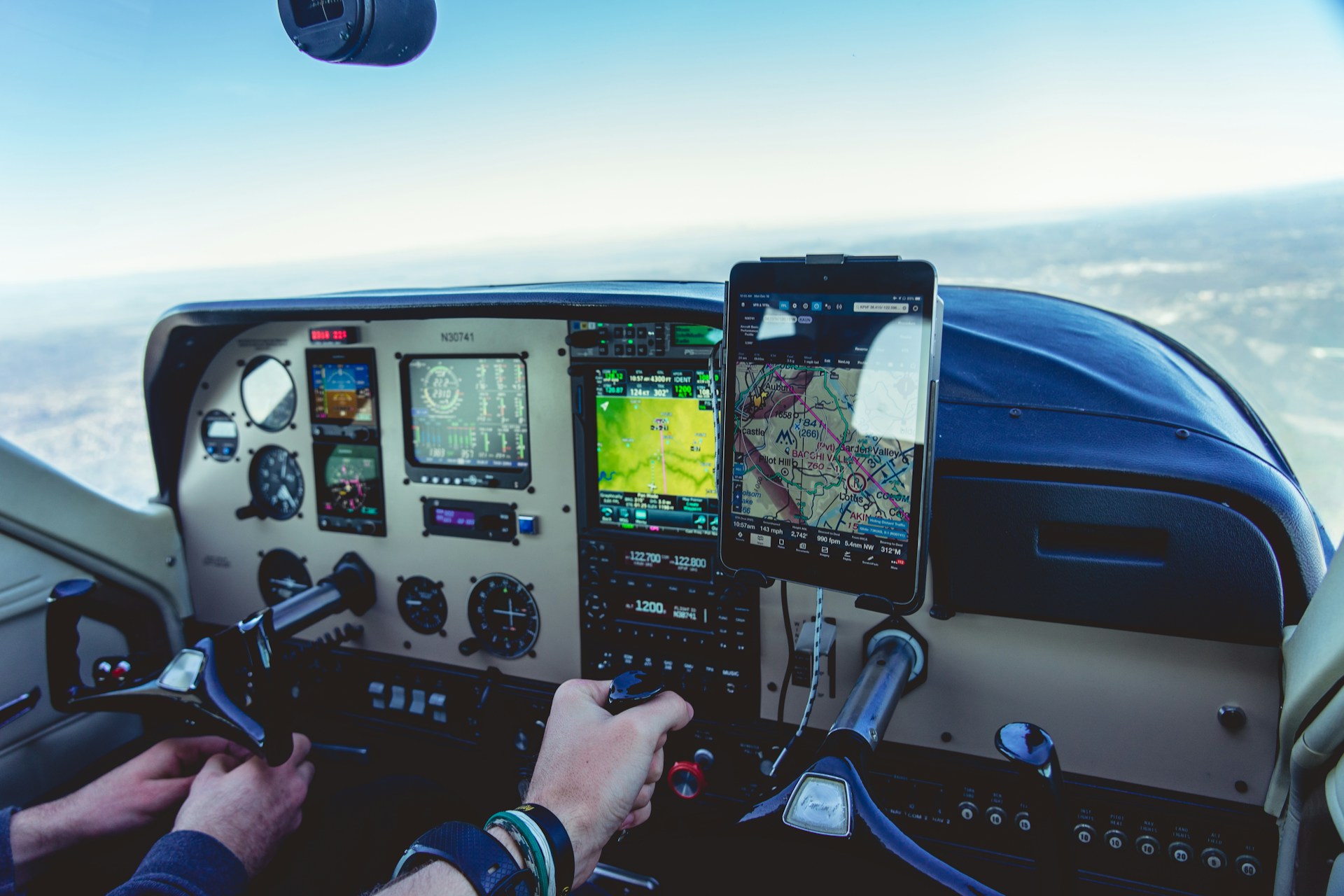
Photo by Clayton Cardinalli on Unsplash