In this guide, we will go through the subtle details of the hourly requirement for pilots and understand real-world UK PPL training time.
The short answer is no.
But before you skip this guide, there is a lot more than just counting hours in aviation training! The minimum requirement for a PPL is 45 hours. However, this is the expected or minimum number of hours you need to be able to just barely learn the ins and outs of handling an aircraft.
Instead of asking: Can I complete my training within 40-45 hours? Pilots should ask: Will I be confident in my skills as a pilot with just 40-45 hours of training?
In truth, many pilots strive for a higher number of hours before they even consider applying for their licence. Additionally, flight hour requirements in training are bifurcated into categories as well.
In other words, not all types of flying while training count towards the total hour requirement.
In this guide, we will go through the subtle details of the hourly requirement for pilots and understand real-world UK PPL training time.
Counting Hours
As per the Civil Aviation Authority of the United Kingdom, all pilots-in-training must strive to reach at least 45 hours to form the basis of flight experience. 40 just won’t cut it! In aviation, practice really does make perfect, and the more flight hours you have, the more experience you gain, which also eventually enables you to apply for more advanced licences.
For example, a Light Aircraft Pilot Licence (LAPL) in the UK only requires about 12 hours of total flight time in order to qualify for the certification, while a pilot opting for the more advanced Private Pilot Licence (PPL) needs 45 hours of total flight time.
If you want to build a career in aviation, an entry-level Commercial Pilot Licence (CPL) requires about 200 hours of total flight time.
Flight hours are divided into two categories:
- Hours logged during dual instruction flights
- Hours logged as a Pilot in Command (PIC)
The first category is for beginners who learn to fly with an instructor on board. This is why it is called a dual instruction flight. The instructor is in command of the aircraft and is tasked to teach you the ins and outs of handling the aircraft.
This includes learning how to taxi, take off, land, manoeuvre and more importantly, how to handle emergencies such as stalls. A pilot needs to obtain about 25 to 30 hours of dual instruction to be deemed experienced for the next category of flight hours: solo flights. Solo flights, where pilots fly alone as the Pilot in Command (PIC), are the cornerstone of aviation training.
These hours are what go towards the final requirement of your pilot licence. For example, for a Private Pilot Licence (PPL), you need about 25-30 hours of dual instruction and at least 10 hours of solo flight. The remaining 5 to 10 hours can be spent on either dual or solo flights to complete the 45-hour requirement.
Keep in mind that solo flights become the focus after you obtain enough dual instruction flight experience. In fact, you can only go for solo flight hours with the endorsement of your instructor, who will give you this privilege after they are satisfied with your initial training.
All hours are logged in a logbook, and pilots can opt to log their hours online or using the old-school method of logging hours with a pen and paper. Your logbook will be verified by your instructor and will be sent to the CAA for final approval when you apply for your licence.
Is 40 Hours Enough? Understanding Real-World UK PPL Training Time
As we have explained above, 40 hours is rarely enough for UK PPL training. Here is what you need to know about the hourly requirements:
The Legal Minimum Vs Reality
In the UK, the CAA minimum for a PPL is 45 flight hours.
We talked above about the bifurcation of these hours as follows:
- 25 hours dual instruction
- 10 hours solo flight
- Including 5 hours solo cross-country
- One Qualifying Cross-Country flight of at least 150 NM, with full-stop landings at two different aerodromes
These form the minimums, and pilots are expected to go above these hours to be deemed ready for flight. On average, a typical UK PPL pilot will be expected to accrue at least 60 to 70 hours before applying for their licence.
Why Students Take Longer
Apart from the expected training requirements, many pilots strive for longer hours for several reasons:
Weather
Weather is the biggest variable in aviation. The truth is weather isn’t always cooperative and can cause students to take long gaps. These gaps between lessons slow skill retention and can cause additional time in relearning rather than progressing.
Training Frequency
Every pilot trains according to their schedule. Some might fully devote themselves to getting their licence quickly, while others may attempt aviation training while doing a day job.
Typically, flying one lesson per week will result in slow progress. While flying 2-3 lessons per week will be more efficient and help you get your licence quickly.
Airspace & Aerodromes
Busy airspace, controlled zones, ATC delays, and aerodrome fleet availability can also cause additional time. Instead of flying, pilots often end up spending time managing procedures rather than just flying. This is also valuable learning, but it adds hours.
Skill Development Isn’t Linear
Skill development varies from one student to the next. Some exercises, like circuits, landings, navigation, and emergencies, can take longer to understand and master. However, this is good! The more time you spend mastering your craft, the better the pilot you will become.
What Do You Need to Add to Your Logbook?
Your logbook or flight ledger can be thought of as your “street creds”. It is the most important companion in your aviation journey, and it is the one thing that can help you progress to great heights in this industry.
Whether it is PPL or CPL training, your logbook will determine your success in aviation. Due to its importance, the logbook maintains a sacred structure and cannot be filled haphazardly.
A common best practice is to maintain tables and write in clear and legible handwriting so that when the logbook is eventually sent for authorisation, it is clear, concise, and easy to read. If it isn’t clear, then the CAA may send back your application or flat out reject it!
You shouldn’t write long sentences and change your train of thought while describing flight conditions. Keep things concise and only enter details that matter. This practice will help you down the road and be beneficial for you if your logbook is processed while applying or renewing your licence.
Here are some features of your flight that must always be described when adding the hours to your logbook:
Time
Timing is crucial in aviation, and when it comes to your logbook, maintaining accuracy when detailing the timings of your flight is fundamental to becoming a professional pilot.
You should always mention the moment of departure and arrival to accurately discern how long the flight lasted. This time is used to count your total flight hours, which will eventually be needed when applying for a licence or Rating.
For logging time, pilots often use the Hobbs time and Tach time to get a fairly close reading of the exact flight time. You can also use digital means to log flight hours, which can do all of this for you.
Some aircraft also offer convenience by activating the Hobbs meter when the master switch of the aircraft is turned on, while in others, it is activated when a pressure switch connected to the landing gear is turned on.
Keep in mind that the Tachometer is linked to the engine RPM and offers a far less accurate reading. This is why the Hobbs and the Tach reading combined offer a reading that is close to the actual flight time.
Location
Where the aircraft takes off from and where it lands is very important if a pilot wishes to log cross-country flights.
It is necessary to record the location regardless, but it gains far more importance when cross-country flights are concerned, where distance matters.
Cross-country flights are necessary to obtain the Commercial Pilot Licence (CPL) as well as additional ratings on top of your Private Pilot Licence (PPL).
Type of aircraft
Your level of experience and certifications dictate the type of aircraft you are allowed to fly or train in. The Light Aircraft Pilot Licence (LAPL) only permits the pilot to fly light aircraft such as the Piper PA 28 or microlights such as the three-axis or the Tiger Moth.
You must also mention the type of aircraft you used for your flight. Piloting a more complex aircraft, such as one with multiple engines, which is usually done with dual instructions via a certified flight instructor (CFI), can enable you to obtain a higher rating on top of your licence.
Flight conditions
Your logbook must also contain details about the weather conditions and visibility before taking off.
Keep in mind that it is illegal to fly in bad weather without an Instrument Rating.
If you are flying in cloudy conditions, light rain, or fog, it is important to mention it in your logbook for full transparency.
You must also log whether you are flying in command of an aircraft or are operating the aircraft under dual instruction.
Prior experience
Physical logbooks can run out of pages (good for you!). However, if you are starting a new logbook, you will need to add a culmination of your prior experience to it as well.
Different Types of Flight Hours
Here are all the different types of flight times that can be recorded in your logbook:
Pilot in Command
As mentioned above, PIC flight is when you attempt to operate an aircraft solo, without an instructor onboard. These hours count towards the hourly requirement for solo flights in your logbook.
Under dual instruction, you fly with a Certified Flight Instructor, and this time is recorded as flight hours under dual instruction.
Cross-Country Flight
Cross-country flights are essential for obtaining your PPL licence. If you live in a region that borders another country and crossing it takes no more than 30 minutes, then those 30 minutes will count as cross-country flight time when it is being logged into your ledger.
When applying for licences, there is a minimum distance requirement depending on what licence you are applying for and what country you are a national of. Most CPL and PPL applications require a cross-country flight totalling at least 50 nautical miles. However, as is the theme of this guide, you are expected to complete at least 150-250 NM.
Instrument Flights
Logging flight hours using instruments or when flying at night isn’t as straightforward as you might think. There are different rules that come into effect after sundown. Pilots must log important times such as flight during sunset, half an hour after sunset, and an hour after sunset.
Nighttime hours can only be logged after the official twilight hours and end right at the beginning of the official civil morning twilight.
Can You Lie About Your Flight Hours?
The short answer is that you can. You can lie about anything, but if you lie in any aviation-related operation, then you are in a world of pain. So, no one would ever recommend it!
Falsifying any information in your logbook will lead to being instantly barred from getting your licence if discovered. Some misinformed pilots do attempt to lie, but the authorities are always a step ahead.
They are well-versed in how pilots used to cut corners and add flight hours that shouldn’t be in their ledgers. This is why you will always get caught, and the damage it does is just not worth it.
Be honest and strive to become a professional. Lying may get you into the cockpit, but you will certainly put everyone at risk, including yourself!
Why Choose Sherburn Aero Club?
Sherburn Aero Club, which has been operational since 1964, is the ideal place for most of your training and flying needs.
We cater to brand new flyers who have just started their journey to the skies, as well as seasoned flyers who have been operating aircraft for decades.
We offer dedicated CPL training as well as comprehensive PPL (A) training and the required experience for operating aircraft at night.
In addition to this, the club also offers simulators for various training needs and to help new pilots gain confidence before the real deal.
With a large fleet of new aircraft and an airfield refurbishment with new runways, hangars, and an extended clubhouse, we also offer a dedicated day-long Flight Radiotelephony Operator’s Licence (FRTOL) course for those wishing to get the certification, running on the first Sunday of every month.
Sherburn also offers pilot medicals to ensure a smooth journey going forward. For those who wish to experience the thrill of a flight for fun or to help fuel their aviation dreams, Sherburn offers experience flights for the newbie, as well as the veteran.
The flight experience option is also available for people who wish to take to the skies for special occasions, even if they aren’t into aviation for the long run.
In addition to that, if you are looking for a hangarage for your own aircraft, need servicing or repairs, want to buy a new aircraft or aviation equipment, or are just looking to enjoy and watch the aircraft, Sherburn Aero Club is the place to be.
Call us on 01977 682 674, email us at flightdesk@sherburnaeroclub.com, or message us via our online contact form for more information on flying, flight hours, and the technicalities involved.
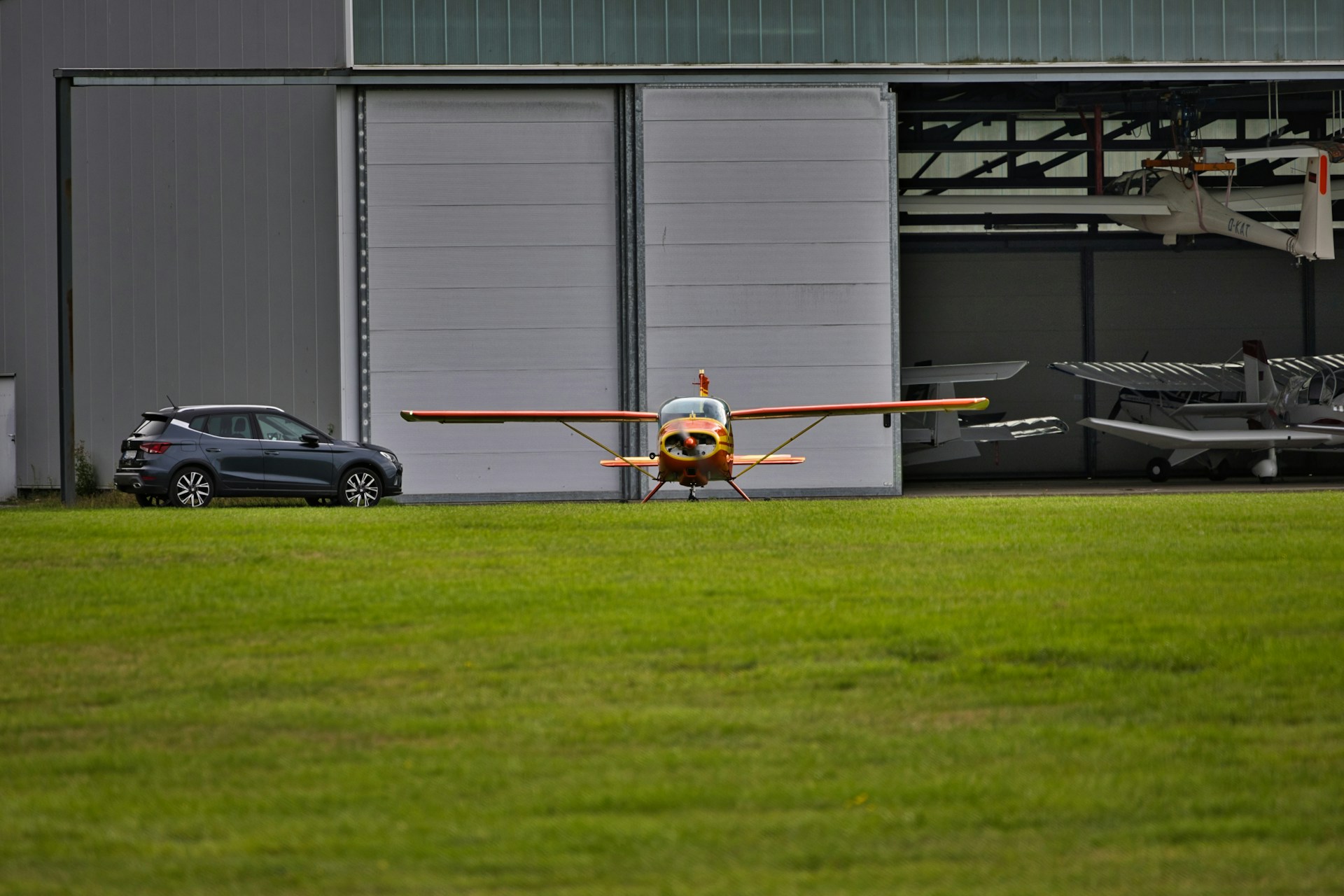
Photo by Wolfgang Vrede on Unsplash