Read below to learn more about why cheap flying lessons often cost more in the long run and the role of a Certified Flight Instructor (CFI) in flight training.
One of the most important components of any flight school is its faculty.
The better the instructors, the more likely it is for the school to be popular and reputable. Of course, this also usually means that these schools charge a premium for their highly standardised and bespoke services.
On the other end of the spectrum, you have cheaper schools that offer suspiciously affordable flying lessons. Are these flight schools better simply because they charge less, and you get to learn how to fly regardless? Not really!
Cheap flying lessons may seem like a no-brainer, but there is a difference between being taught by a certified professional and your average uncertified instructor who operates a rundown aircraft.
Read below to learn more about why cheap flying lessons often cost more in the long run and the role of a Certified Flight Instructor (CFI) in flight training.
Flight Instructors in Aviation
They say that to truly master something, you must first learn from someone who has already mastered it.
Mastery in any craft requires commitment, skill, perseverance, and experience. When someone masters something, their skills become second nature to them. They build an intuition automatically and can help guide others towards the same path.
This is the role that Certified Flight Instructors (CFIs) have in aviation. They don’t just teach; they help bring out the best qualities in pilots and push them to achieve greatness.
Sure, anyone can tell you how to fly an aircraft using a manual or a set of defined steps, but it takes a master to show how you can use your skills in creative ways and even get yourself out of trouble during emergencies. This is the reason why Certified Flight Instructors are so crucial to your aviation journey.
Why Cheap Flying Lessons Often Cost More in the Long Run
Cheaper lessons may seem logical. After all, that’s how market forces work, right? There are multiple competitors, and each of them is in an endless price war where they either lower their price or add value to their service to make it more worthwhile.
The same logic should also apply to aviation, then. But that’s not the case!
There is a difference between opting for competitively priced flight training and cheap flying lessons.
Cheap flying lessons tend to be suspiciously cheap, which is usually a very bad sign because it means that there is either something dangerous or illegal involved in the service.
The irony is that these lessons also result in higher costs over time and a buildup of frustration as well.
Here are the reasons why cheap flying lessons can end up costing you more:
Older Aircraft
Cheaper things are typically a sign of compromises. That is just how the world works, and it is no different in aviation. If you see an ad for cheap lessons online, you can bet that they have achieved this lower price by cutting corners in the quality of the lesson.
In most cases, cheap flying lessons are often done on very old aircraft. These aircraft can allow cheaper flight schools to give lower hourly rates. While these planes may be safe, they often come with severe limitations.
Older avionics, less reliable systems, and more frequent maintenance issues can all cause a headache, especially when you are on a committed flight training schedule. Each cancellation or delay can break learning continuity and can cause you to take extra time for revision.
In other words, by not fully being able to practice lessons, you are bound to keep revisiting old lessons just to keep up, which can rack up costs.
Instructor Availability
Lower-cost schools usually achieve their affordable status by relying heavily on less experienced instructors. These instructors may be capable, but there will be a high turnover of instructors in cheaper schools. This is because these instructors themselves are in the learning phase and want to accumulate flight hours.
This can cause them to have schedule clashes that eventually affect students. Think about it, if you frequently change instructors, you will likely repeat exercises or spend time reestablishing old topics, which can result in more billable hours.
Hidden Costs
Cheaper schools with hidden costs? That’s not a shock at all! In fact, most schools use marketing gimmicks to bring in candidates this way.
By showing low prices with small asterisks, these schools can lure people in and lock them into a flight training programme. Once you sign on the dotted line, you will eventually realise that there are plenty of hidden costs in the programme.
For example, cheaper advertised rates often exclude essential extra costs such as landing fees, briefing time, study materials, exam fees, and equipment costs. You may look at the headline rate and be amazed at the low hourly rate, but these rates can quickly escalate once all the extras are included.
Poor Scheduling
Instructor availability is one thing, but aircraft availability is more important because it determines how soon you can progress through your training.
Budget schools may be busier, but they also have limited aircraft availability. This makes it difficult to book consistent lessons over time, especially when the weather is favourable.
If you can’t book on time, then you are guaranteed to have consistent gaps in your lessons, which can, again, cause you to revisit old topics and waste both time and money.
Failure Rate
If you do not train properly and have long delays, then you will eventually face training failure throughout the programme. Failure is nothing to be ashamed about; however, when it becomes consistent, that is when you should seriously worry.
It's common to have a high failure rate among candidates in cheaper schools due to all the reasons we have discussed above. For example, long delays and rushed instructions can leave students underprepared for exams and skill tests.
Keep in mind that failing a test means you will have to pay again, and not just for the test, but also for the added training flights.
Added Hours
The real tragedy here isn’t just the cost, but the total added time it takes to get through training in budget schools.
The biggest misconception in flight training is that people often filter schools using the hourly rate metric.
This is the wrong approach because your total cost depends on how many hours you need to truly build on your skills. A school with higher rates but a great structure, like Sherburn Aero Club, may get you to your licence faster since it will offer a highly structured training schedule with fewer repeat lessons and delays.
Role of a Good Certified Flight Instructor (CFI)
Certified Flight Instructors (CFIs) have the most important job in aviation, and that is to train future pilots.
However, if you want to pave the future, you need to be a master in the craft yourself. This is why good instructors are so important; they literally shape the future of aviation in any country.
Good instruction involves different aspects of training, from imparting important theory to helping a beginner pilot build confidence in the sky.
Here is the role of any good Certified Flight Instructor (CFI):
Ground School Training
Pilot training may be advertised with flashy photos of people flying and soaring across the skies, but in reality, one of the most important aspects of training occurs on the ground.
Theoretical concepts form the basis of any flight programme, which is why they are so important in flight training. There is a detailed syllabus that trainees must master before being allowed to climb into the cockpit. All students must pass the nine theory tests to be eligible for a PPL licence.
CFIs help aspiring pilots get ahead of ground school training and work with the students to highlight their strengths and identify their weaknesses. CFIs also play the role of mentors and answer as many questions as they are asked by students.
Theory topics range from Air law, Navigation, and Meteorology, to Principles of flight, Flight planning and monitoring, and Human performance. A minimum of a 75% score is necessary to qualify for a pilot licence.
Training via a simulator
Simulator training may seem easy, but it is a tough exercise that puts pilots in various complex situations in a simulated environment. Some of the training for commercial flight programmes, like the Commercial Pilot Licence (CPL), is completed via a simulator.
A good CFI guides pilots in a way that allows them to build intuition. This way, they not only gain confidence but also remain calm during emergencies, which is a core skill!
Only expert CFIs have the privilege to teach CPL candidates because this programme is particularly demanding and requires a strict training regimen. Simulators are an ideal mode of instruction in such cases since risky situations cannot be recreated in-flight without posing a risk to the people on board.
Here at Sherburn, we have our own flight simulator, known as the G-SIMM, which helps prepare both beginner pilots for maiden flights, as well as more experienced pilots hoping to brush up on their skills.
Training in-flight
This is what CFIs train for! Flight training is where the real fun happens and where a good CFI can always outshine an inexperienced instructor. Much of a pilot’s initial training is undertaken in dual-instruction mode, which means they fly along with an instructor.
Dual instruction flights are extremely important because they enable the pilots to learn the ins and outs of flight operations and how to fly with ease.
The CFI can help ease a beginner pilot’s mind and teach them how to have a smooth flight so that they can always remain calm and focus on navigating the aircraft properly.
The goal of any CFI is to instil confidence and understand the needs of the candidate during a flight. A good CFI is always on the lookout for performance issues and areas of improvement that they can work on with the student.
CFIs also play the role of being a bridge between flight schools and the public since they also interface with regular folks who book experience flights, which allows the average Joe to feel the thrill of flying without any formal training.
Experience flights are conducted with a CFI on board who can guide people throughout the flight and motivate them to enrol in flight training if that is something that they are looking for.
Sherburn’s Team of Certified Flight Instructors (CFIs)
The airfield team at Sherburn is exceedingly welcoming and is always ready to help visitors and members alike.
If you are someone who just wishes to have a look around and get a feel of the place, or perhaps experience your first flight, then the airfield team, which includes our highly qualified CFIs as well as ground crew, would be happy to cater to your needs.
Sherburn has a total of 14 CFIs on board, all of whom are eager to help you get ahead in your aviation career.
Our team of flight instructors includes Alastair Breckon, Andrew Burton, Chris Herd, Glenn Moody, James Fletcher, Jason Gilmour, Jonathan Furness, Louis Rehor, Pete Barber, Peter Atkinson, Peter Jackson, Salvador Moya, Steve Osborne, and Vernon Guppy.
At Sherburn, flight instructors charge an hourly rate, with one hour of standard instruction costing £44 GBP, while more complex training, such as that involved in acquiring Night and Instrument Ratings, costing around 46 GBP.
While the simulator is free to use, if an instructor is required for training, the same rates are charged. Apart from this, aircraft are also available for hire at an hourly rate. To fly the Piper PA-28 Warrior and Cadet, the prices per hour are 208 GBP and 198 GBP, respectively, while the Cessna 152 Aerobat comes in at a rate of 168 GBP.
Why Choose Sherburn Aero Club?
Sherburn Aero Club, which has been operational since 1964, is the ideal place for most of your training and flying needs. It is one of the largest flying clubs in the North of England and also one of the largest in the country.
With a large fleet of new aircraft and an airfield refurbishment with new runways, hangars, and an extended clubhouse, we cater to brand new flyers who have just started their journey to the skies, as well as seasoned flyers who have been operating aircraft for decades.
Sherburn also offers the opportunity to learn alongside a team of dedicated Certified Flight Instructors (CFIs), both via aircraft and our simulator.
If you wish to begin your career in aviation or wish to take to the skies as a hobby, Sherburn’s flight training school offers private and commercial licences, along with pilot medicals, to ensure a smooth journey going forward.
For those who wish to experience the thrill of a flight for fun or to help fuel their aviation dreams, Sherburn offers experience flights for the newbie, as well as the veteran.
The flight experience option is also available for people who wish to take to the skies for special occasions, even if they aren’t into aviation for the long run.
In addition to that, if you are looking for a hangarage for your own aircraft, need servicing or repairs, want to buy a new aircraft or aviation equipment, or are just looking to enjoy and watch the aircraft, Sherburn Aero Club is the place to be.
Call us on 01977 682 674, email us at flightdesk@sherburnaeroclub.com, or message us via our online contact form for more information about the private pilot training facility at Sherburn, as well as our dedicated team of highly-skilled CFIs.
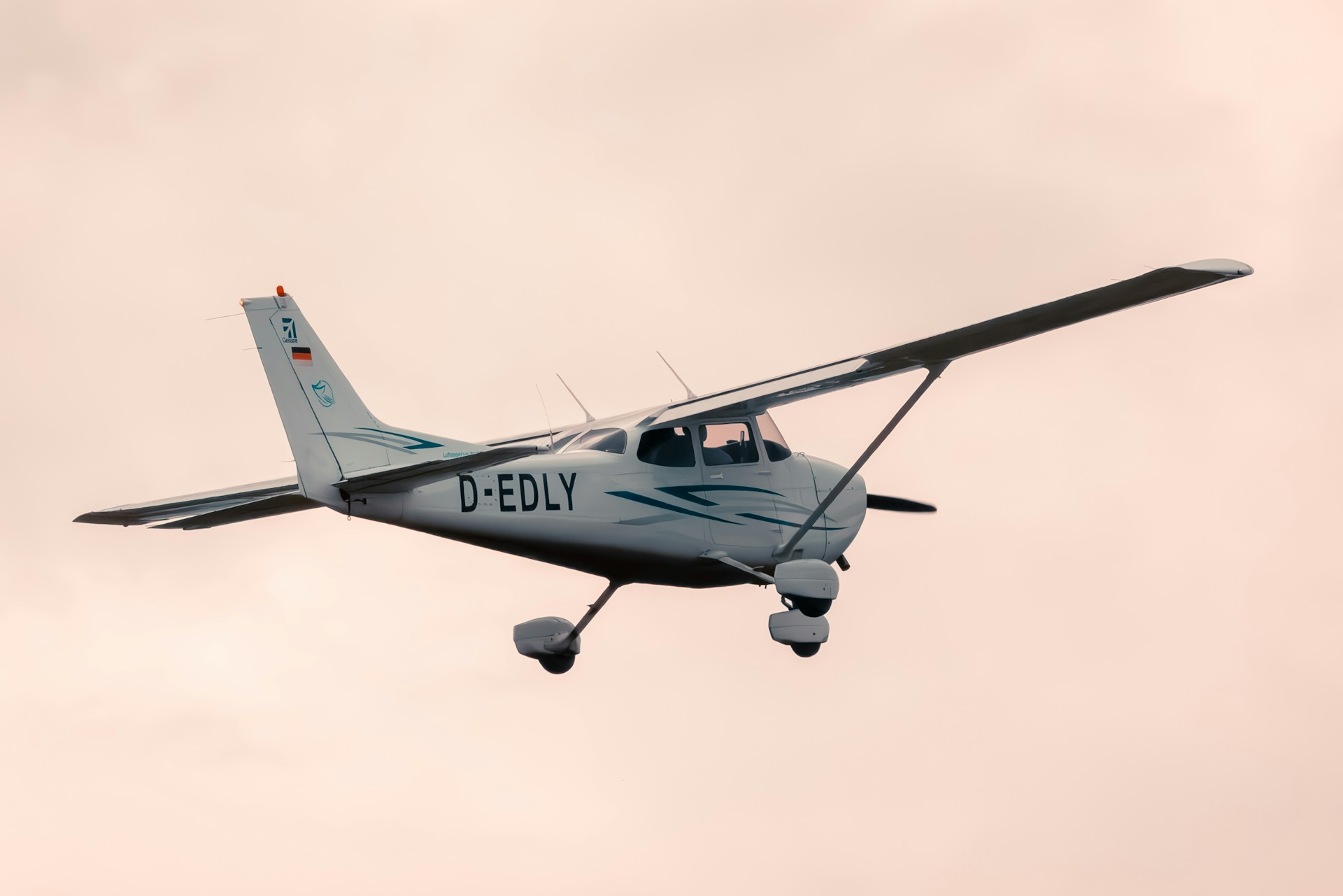
Photo by Matthias Wesselmann on Unsplash