Keep on reading to learn more about the Dambusters route and how to conduct a self-fly Nav with safety notes and alternatives.
- The Dambusters Route
- Self-Fly Navigation over Derwent Dams
- Key Safety Notes for Navigating the Dambusters Route
- Planning a Self-Fly for The Dambusters Route
- Mastering VFR for Self-Flys
- VFR Basics and Essentials
- VFR Requirements for Self-Flys
- VFR Flight Safety During Self-Fly
- Why Choose Sherburn Aero Club?
Take a trip down history with one of the most iconic and significant routes in the United Kingdom’s history.
The Dambusters route was a World War II RAF flight training route that was used for low altitude training over UK reservoirs. If you want to experience what the UK’s finest and most valiant pilots did back in the day, then there is no better place than Derwent Valley.
Keep on reading to learn more about the Dambusters route and how to conduct a self-fly Nav with safety notes and alternatives.
The Dambusters Route
During World War II in May 1943, 19 Avro Lancaster bombers of the Number 617 RAF squadron attacked German dams in the Ruhr Valley using special bouncing bombs developed by Barnes Wallis.
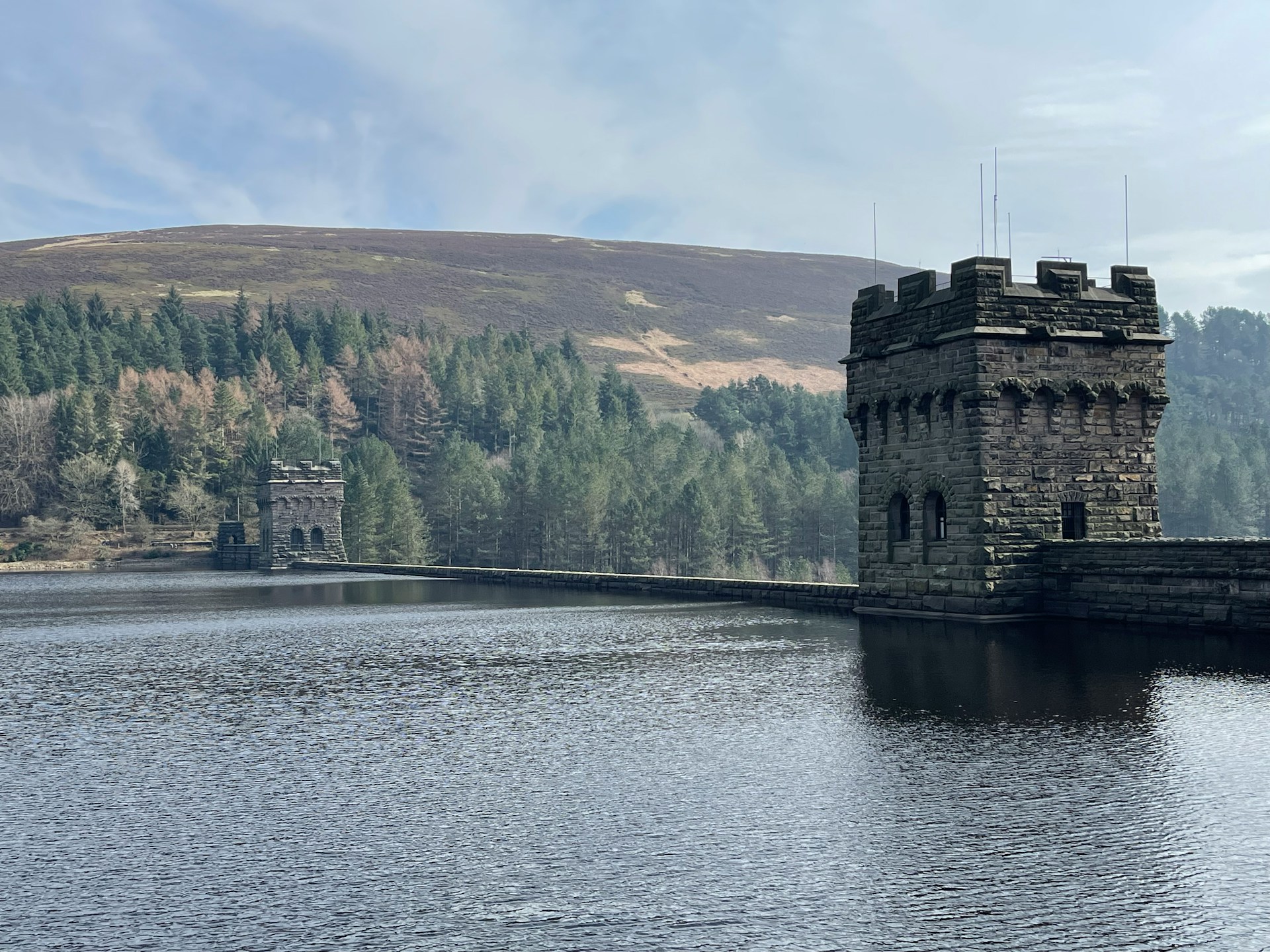
The target for the Dambusters Raid or Operation Chastise included the Mohne, Eder, and Sorpe dams. The squadron extensively trained at low altitude over UK reservoirs with similar terrain characteristics. This included training over the Derwent and Howden Dams in the Peak District. These areas provided a very similar layout to the twin-towered profiles of the German dams.
Today, the Dambusters route is often visited by aviators and history buffs to relive the glory days of the 617 squadron and to remember their bravery and valour.
Self-Fly Navigation over Derwent Dams
Planning a self-fly as a private pilot? Here is how to replicate and relive the training route to the fullest.
Start with typical visual waypoints such as:
- Derwent Reservoir or Derwent Dam, which is a key landmark and historic training point.
- Howden and Ladybower Dams, which are included in scenic routes over the Peak District.
- Peak District Terrain, which features peaks, valleys, and rivers that make visual navigation easier but may also add complexity in low-altitude flights.
- Departure and Arrival Airfields, including Blackpool, Sherburn Aero Club, or even private strips near the Peak District, which are some of the most common bases for these flights.
Key Safety Notes for Navigating the Dambusters Route
Pilots who want to relive this historical route must familiarise themselves with the local terrain and the relevant aviation regulations.
Let’s go over a few safety notes:
Altitude and Terrain
The Peak District has hilly terrain with rapid elevation changes that may pose a serious challenge to new pilots. The goal for private pilots must be to maintain safe altitudes above the Minimum Safe Altitude or MSA.
You will also need to ensure that your route is clear of obstacles and that you are flying within VFR limits.
Keep in mind that low-level flights are legal but require strict compliance for maximum safety. Pilots must always avoid congested areas and respect built-up zones and fully inspect the terrain before making their run through the route.
Airspace Regulations
Always check controlled airspace boundaries such as the CH/CTR sectors around or nearby aerodromes.
If you plan to conduct a group self-fly, then we recommend that you first obtain permits and coordinate with ATC for seamless, organised scenic flights.
Weather and Visibility
The weather in and around Peak District can change without notice. This is why it is important to account for cloud base, wind, and rain forecasts. Pilots will need to plan ahead and use Instrument Flight Rules (IFR) alternatives if applicable, even on VFR flights.
If the cloud base drops or you encounter fog, then you will need to ascend to a safe VFR altitude. Always ensure that you conduct your flight during good VFR conditions. You can always postpone the flight to a later date since your goal should be to maintain maximum safety for low-altitude flights.
Consider your Experience
This route is quite demanding, and for good reasons. After all, the 617 were trained on this route and were considered battle-ready after completion. Low-level flying in general demands a solid pilot experience, especially in mountainous terrain.
We recommend that you work within your limits to establish safety during your flight. Furthermore, you will also need to ensure that your aircraft is capable and fulfils the minimum performance and serviceability requirements.
Planning a Self-Fly for The Dambusters Route
Here are some tips for planning the perfect self-fly:
Pre-flight Planning
Always print and keep charts with you. You will also need to build a robust flight plan that covers all the details about your route.
You will have to extensively cover the route, terrain, weather information, and fuel calculations in your flight plan. These are just some of the details that you need to mention. Some of the other important aspects of the flight plan include details about alternative routes, airspace information, aircraft details, and more.
Weather Information
As a private pilot, you will be flying in VFR conditions (more on this below) during your self-fly. Visual Flight Rules are a set of guidelines that dictate the appropriate conditions for flights.
VFR enables pilots to remain safe during flights and allows them to use visual aids to see where they are going. These outstanding visibility conditions are not only important for general flights but are also a core requirement for low-altitude flights.
Aircraft and Human Limitations
As mentioned above, for a successful self-fly of the Dambusters route, you will need to account for aircraft and human limitations.
Pilots with certain health conditions may not be able to complete these heart-pounding and adrenaline-fueled trips. Private pilots must work within their limitations and operate aircraft as per their comfort level. There is no need to impress anyone, and safety is the topmost priority.
You must also take special precautions and fly according to the limitations of your aircraft. Get to learn more about your aircraft using the manufacturer’s manual and the engineers at your flight school. By knowing various information about the fuel tank capacity, stall speed, top speed, and braking capabilities, you can fly within established and safe limits.
Aircraft Inspection
Always visually inspect your aircraft before taking off. Since you will be flying at lower altitudes, it is important that you keep an eye out for mechanical and electrical faults in your aircraft.
Any known issues must be reported immediately to the ground crew, who can then address them. If the issue is severe enough, you might want to postpone your flight until your aircraft is in good condition.
Flight inspection maintains safety and allows pilots to fly smoothly and without consequence. We recommend that you have your aircraft inspected using your club’s engineering department. Comprehensive flight schools, like Sherburn Aero Club, also have in-house aircraft engineers who can help you diagnose and find issues in your aircraft before they become a problem.
Mastering VFR for Self-Flys
As mentioned above, VFR refers to a set of regulations under which a pilot operates an aircraft in weather conditions generally clear enough to allow the pilot to see where the aircraft is going. Weather phenomena like snow, rain, fog or hail can cause dips in visibility, which can alter the performance of a pilot in the air.
While pilots can navigate the skies in low visibility conditions, they will need additional training, specifically an Instrument Rating (IR), to be able to fly an aircraft with confidence. However, for beginners with a PPL or a LAPL, VFR conditions are the way to go.
VFR Basics and Essentials
Here are some of the reasons why VFR is so important:
Maintaining Separation
VFR enables pilots to maintain a safe distance and see other aircraft in the skies. This increases safety and enables pilots to fly with confidence knowing that they are well-separated from other aircraft in the sky.
Visual Navigation
VFR is used because it enables pilots to fly using visual aids and not just onboard instrumentation. This is an important point because being able to see the terrain is crucial, especially when flying low, as in the case of the Dambusters route.
Under VFR, pilots can use landmarks, roads, rivers or other manmade or geographical features to pinpoint their location and safely run through any route.
Avoiding Restricted Airspaces
Under VFR, pilots can easily avoid or go around restricted airspaces. This can be near military installations or chart-marked airspaces. Remember, restricted airspaces require special clearance and entering them can be a very serious offence. This is why pilots need to fly under VFR so that they can avoid controlled airspaces and avoid fines or penalties.
VFR Requirements for Self-Flys
To fly under VFR, private pilots must ensure that they fulfil the core VFR requirements set by the Civil Aviation Authority (CAA).
The most important requirement is related to the Weather Minima. This dictates the minimum acceptable weather conditions to safely operate an aircraft without additional certifications or training.
VFR flights are only permitted in Visual Meteorological Conditions, and these conditions vary by airspace class, altitude, and whether you're flying above or below 3,000 ft.
During the Dambusters route, you will need to ensure that you fly as per the weather minima requirements. Any deviation from these requirements must be carefully considered, and pilots must be willing to abort the route to favour safety over completion.
Make sure that you fly within the limitations of your airspace as well. For example, Class G Airspace allows for below 3,000 ft AMSL – this means that the skies are clear of clouds, and you can visually see the surface with 5 km visibility. Meanwhile, Controlled Airspace (Class A-D) requires 5 km visibility and a 1,000 ft vertical/1,500 m horizontal distance from clouds.
VFR Flight Safety During Self-Fly
Here is a short guide for how to conduct VFR flights:
Familiarise Yourself
The best way to get the most out of your flight is to first familiarise yourself with the terrain. Walk-through videos and first-hand encounters are the gold standard to learn more about what to expect in any terrain.
Pilots are always willing to share their experiences, and you can also discuss the routes with your instructors for more information.
The more you know about your route, the better you will be able to navigate it without problems. The Dambusters route is based on a low altitude run, which means that you will need to take special precautions since one wrong move can result in disaster.
Higher Altitudes
VFR conditions enable pilots to fly high, where they usually get stable weather conditions. However, during your Dambusters self-fly, you will need to make sure that you can safely abort the route and ascend if you face any disturbances in the weather or see any obstacles in the terrain.
Ascending to higher altitudes may just be able to save your life, especially during an emergency. Always make sure that you keep a minimum safe altitude while flying this route, and never be the hero. Always be ready to expect the worst and abort when needed.
Pre-Flight Training
When flying the Dambusters route, you will need to be at the top of your game and be prepared.
Since the route involves low altitudes, you will need to ensure that you are able to quickly make decisions on the fly. For this, you will need to be well-rested and alert. Make sure that you get a good night’s rest the day before your flight and are fully cognisant of your surroundings.
When conducting a group self-fly, please ensure that everyone in your party is on the same page and is briefed about the terrain and what to expect. If you are leading the self-fly, then you will have to be extra careful during the route.
Always be available over the radio and maintain constant contact. If you feel uneasy due to a change in the route or obstacles, then do not hesitate to abort. It's better to be safe than sorry, and there is no use in you trying to satisfy your ego during a flight like this.
Why Choose Sherburn Aero Club?
Sherburn Aero Club, which has been operational since 1964, is the ideal place for most of your training and flying needs. It is one of the largest flying clubs in the North of England and also one of the largest in the country.
If you wish to begin your career in aviation or wish to take to the skies as a hobby, Sherburn’s flight training school offers private and commercial licences, along with pilot medicals to ensure a smooth journey going forward.
For those who wish to experience the thrill of a flight for fun or to help fuel their aviation dreams, Sherburn offers experience flights for the newbie, as well as the veteran, in various types of light aircraft.
The flight experience option is also available for people who wish to take to the skies for special occasions, even if they aren’t into aviation in the long run.
With a large fleet of new aircraft and an airfield refurbishment with new runways, hangars, and an extended clubhouse, we cater to brand-new flyers who have just started their journey to the skies, as well as seasoned flyers who have been operating aircraft for decades.
Sherburn offers a dedicated day-long Flight Radiotelephony Operator’s Licence (FRTOL) course for those wishing to get the certification, running on the first Sunday of every month.
In addition to that, if you are looking for a hangarage for your own aircraft, need servicing or repairs, want to buy a new aircraft or aviation equipment, or are just looking to enjoy and watch the aircraft, Sherburn Aero Club is the place to be.
Call us at 01977 682 674, email us at flightdesk@sherburnaeroclub.com, or message us via our online contact form for more information on light aircraft, training requirements, fee structure, licensing procedures, as well as experience flights and pilot training at Sherburn.