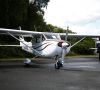

In this guide, we will go through the differences between instructor-led and self-directed post-PPL flying and how to get the most out of your experience after obtaining a PPL.
There are several ways to progress your aviation journey after obtaining your Private Pilot Licence (PPL).
One way is to go the DIY route, where you opt for self-directed flying. This approach may seem freeing, but it will often cause pilots to take longer to master advanced skills.
The other approach is instructor-led post-PPL flying. By flying with an experienced instructor, fresh PPL holders can quickly progress through advanced flying exercises and become more competent and efficient pilots.
Both approaches have their merits and demerits. In this guide, we will go through the differences between instructor-led and self-directed post-PPL flying and how to get the most out of your experience after obtaining a PPL.
What Is Instructor-Led Post-PPL Flying?
After obtaining your PPL, you will reach a crossroad where you will have to decide between continuing to fly mainly with instructors or begin developing independently through self-directed lessons.
Both approaches are valid and build experience, but the difference is that they shape skills, confidence, and progression very differently.
Think about it in terms of learning a new instrument. Sure, you can go the DIY approach and pick up guitar lessons on your own, but you will likely struggle with the fundamentals and fumble your way to success.
In the same way, flight training, even during the post-PPL phase, is similar. While you may be able to progress, you may not be able to build the right level of confidence and skills compared to going with an instructor.
However, this doesn’t automatically mean that one approach is better than the other.
Instructor-led post-PPL flying offers structure, oversight, and accelerated skill refinement, while self-directed flying will build decision-making, independence, and provide real-world experience.
The truth is that most pilots go for a hybrid approach where they combine the learnings from both and excel in their chosen qualifications.
Instructor-Led vs Self-Directed Post-PPL Flying
Let’s highlight the advantages and disadvantages of both instructor-led and self-directed post-PPL flying:
Instructor-Led Approach
This approach enables pilots to continue flying with a certified flight instructor (CFI) after obtaining their licence.
Instructor-led flying can include:
- Advanced handling practice
- Navigation refreshers
- Cross-country coaching
- Instrument familiarisation
- Confidence-building in challenging conditions
- Preparation for ratings such as Instrument Rating (IR) and Night Rating (NR)
Advantages of Instructor-Led Flying
Here are four advantages of flying with an instructor:
-
Faster Skill Development
This is the most obvious advantage. An instructor is highly trained and will have more logged hours than you. They know the ins and outs of advanced flying manoeuvres, which makes them indispensable when learning new flying concepts.
Great instructors can immediately spot weak or inefficient habits before they become ingrained. This is why instructor-led flying is very beneficial for the first 50–100 hours after qualification. During this time, pilots are still consolidating core skills, which is why they must start right.
-
Exposure to New Situations
If you want to learn emergency procedures or train on how to get out of various situations while flying, then training with an instructor is the way to go. While you may be able to slowly master tricky manoeuvres on your own, you will need an instructor to help you out with tough flying scenarios safely.
Flying with an instructor allows you to safely experience:
- Short or grass strips
- Stalls
- Emergency procedures
- Navigating around controlled airspaces
- Serious crosswinds
- Poor visibility procedures
- Complex aircraft systems
These tough flight scenarios make flying with an instructor pertinent, especially for newly qualified private pilots.
-
Better Structure
Aviation training is designed to have a very strict structure.
As a student pilot, you will be exposed to this structure and be familiarised with it by the time you graduate. This is why suddenly going the DIY route may be jading.
An instructor-led post-PPL flying plan will follow a similar structured programme, which will make it easier for you to learn new concepts.
-
Easier Transition to Additional Ratings
As a pilot, your aim should be to progress through your goals most effectively. After all, aviation training is expensive and time-consuming! If you want to attempt tricky new qualifications such as Night Rating and Instrument Rating, then instructor support will become highly valuable.
Instructors can help you progress towards the following:
- Night Rating
- IR(R)
- CPL pathway
- Complex aircraft differences training
Some qualifications, such as the IR and CPL pathways, require professional coaching, and you may not be able to achieve success if you go with a self-directed approach.
Disadvantages of Instructor-Led Flying
Here are some important disadvantages of flying with instructors after obtaining your PPL:
-
Higher Cost
Your PPL itself would’ve been an expensive endeavour, so continuing with professional instruction will continue to bleed your wallet. Dual instruction (flying with an instructor) adds additional fees on top of aircraft hire, making it significantly more expensive than solo flying.
-
Reduced Independence
Most pilots dream of achieving independence after obtaining their licence, but if your goal is to continue with instruction training, then you will have to compromise on your flight freedom. Furthermore, some pilots may become overly reliant on instructor reassurance. This can delay developing real command confidence and cause the pilot to temporarily struggle while flying alone.
What Is Self-Directed Post-PPL Flying?
On the contrary, Self-directed is when pilots choose to operate independently as Pilot in Command (PIC). Using this approach, they plan and conduct flights without instructor supervision.
Typical examples of self-directed flying include:
- Solo cross-country trips (mandatory for PPL)
- Visiting unfamiliar aerodromes
- Local leisure flying
- Group fly-outs
- Hour building
You may notice that these activities do not involve learning advanced manoeuvres or exploring dangerous flying scenarios for experience. That is because self-directed post-PPL flying is very limited.
In all honesty, it should be! The reason why is that dual instruction flights, especially for new PPL holders who want to go for advanced qualifications, have to be conducted by a professional if they want to effectively learn without putting themselves at risk or wasting time and resources.
However, there are a few noteworthy advantages of self-directed PPL flights.
Advantages of Self-Directed Flying
-
Builds Experience
When flying alone, you get to be the captain. You call the shots, and whatever you do is on you. This type of command is unique and can be a huge confidence booster for many pilots.
When flying alone, you will make the following:
- Go/no-go decisions based on weather and clearance
- Fuel calculations
- Weather assessments
- Diversions
- Passenger management decisions
All these activities may seem trivial, but they build confidence and allow pilots to take this confidence forward when they opt for advanced lessons.
-
More Affordable Hour Building
Flying alone means flying without worrying about additional costs. If you do the math, you will realise that solo aircraft rental is cheaper than dual instruction, making regular flying more sustainable over the long term.
-
Flexibility and Freedom
As mentioned above, one of the biggest advantages of self-directed flights is that you get excellent flexibility and freedom.
While flying alone, you get autonomy of the following:
- Destinations
- Pace
- Aircraft
- Routes
- Flying goals
This level of freedom and flexibility is one of the primary reasons why pilots favour the modular self-directed approach in aviation training overall.
-
Better Real-World Experience
When learning how to fly by yourself, you will get to build a lot of experience on your own. Pilots are exposed to multiple aspects of aviation when going the self-directed route.
They often gain exposure by:
- Visiting unfamiliar aerodromes on their own
- Managing changing weather and plotting courses
- Flying with passengers and managing passengers
- Handling operational pressures and ensuring aircraft safety
In summary, it is better to go for a combined approach that can give you the best of both worlds. New pilots may benefit a lot from instruction-led post-PPL flying and self-directed lessons. However, we recommend that you leave the risky or advanced lessons to the instructors for the best experience.
Where To Find a Certified Flight Instructor (CFI)?
The airfield team at Sherburn is exceedingly welcoming and is always ready to help visitors and members alike.
If you are someone who wants to meet instructors before coming on board or if you just wish to have a look around and get a feel of the place, then the airfield team, which includes our highly-qualified CFIs as well as ground crew, would be happy to cater to your needs.
Sherburn has a total of 14 CFIs on board, all of whom are eager to help you get ahead in your aviation career.
Our team of flight instructors includes Alastair Breckon, Andrew Burton, Chris Herd, Glenn Moody, James Fletcher, Jason Gilmour, Jonathan Furness, Louis Rehor, Pete Barber, Peter Atkinson, Peter Jackson, Salvador Moya, Steve Osborne, and Vernon Guppy.
At Sherburn, flight instructors charge an hourly rate, with one hour of standard instruction costing £44 GBP, while more complex training, such as that involved in acquiring Night and Instrument Ratings, costs around 46 GBP.
While the simulator is free to use, if an instructor is required for training, the same rates are charged. Apart from this, aircraft are also available for hire at an hourly rate. To fly the Piper PA-28 Warrior and Cadet, the prices per hour are 208 GBP and 198 GBP, respectively, while the Cessna 152 Aerobat comes in at a rate of 168 GBP.
Picking The Right CFI
Not every CFI is a great instructor. If you want to be the best, then you must train with the best.
While comprehensive flight schools like Sherburn offer a panel of excellent and experienced instructors, you should ideally look for the following attributes when picking a CFI:
Patience
No one likes to be rushed while learning! Patience is key, which is why an easily annoyed CFI will not be able to provide an environment that helps you grow.
Clear communication
Aviation is built on the concept of clear and concise communication. If you cannot establish a good level of communication with your CFI, then chances are that you will not be able to progress through your training effectively. For example, a CFI who glosses over important information, does not give full instructions, or uses far too difficult language to communicate basic ideas is not the ideal teacher.
Calm demeanour
A calm and welcoming attitude is what most struggling pilots need to get through advanced lessons. Something as simple as a smile can go a long way and help pilots maintain an emotional balance while learning new skills.
Handling Stress
CFIs are supposed to teach pilots how to manage stress while flying. If they do not practice what they preach, then there is very little point in training with a CFI who creates a stressful environment.
Flight operations require a level head and a cool mind. Every pilot is required to maintain themselves when under pressure. This is why a good CFI will always work with the pilot to create a conducive environment for them.
Honesty
Great CFIs are honest. They are empathetic but very honest! They will tell you when you fumble and help you through it. They will not sugarcoat things and allow you to realise the mistakes that you make during lessons.
This is an important step because pilots need to reduce risk while flying, and the fewer mistakes they make, the more likely they are to keep the risk percentage low. If a pilot has a skill gap, then it must be communicated to them so that they can work on rectifying the errors.
Passion
They say passion is infectious when you are with like-minded people. The same is true for pilots and CFIs. This is perhaps one of the biggest things that separates regular CFIs and great instructors.
They have an innate passion for flight!
An enthusiastic and passionate instructor will likely keep the pilot motivated and allow them to grow and appreciate the art of flying.
Why Choose Sherburn Aero Club?
Sherburn Aero Club, which has been operational since 1964, is the ideal place for most of your training and flying needs. It is one of the largest flying clubs in the North of England and also one of the largest in the country.
With a large fleet of new aircraft and an airfield refurbishment with new runways, hangars, and an extended clubhouse, we cater to brand new flyers who have just started their journey to the skies, as well as seasoned flyers who have been operating aircraft for decades.
Sherburn also offers the opportunity to learn alongside a team of dedicated Certified Flight Instructors (CFIs), both via aircraft and our simulator.
If you wish to begin your career in aviation or wish to take to the skies as a hobby, Sherburn’s flight training school offers private and commercial licences, along with pilot medicals to ensure a smooth journey going forward.
For those who wish to experience the thrill of a flight for fun or to help fuel their aviation dreams, Sherburn offers experience flights for the newbie, as well as the veteran.
The flight experience option is also available for people who wish to take to the skies for special occasions, even if they aren’t into aviation for the long run.
In addition to that, if you are looking for a hangarage for your own aircraft, need servicing or repairs, want to buy a new aircraft or aviation equipment, or are just looking to enjoy and watch the aircraft, Sherburn Aero Club is the place to be.
Call us at 01977 682 674, email us at flightdesk@sherburnaeroclub.com, or message us via our online contact form for more information about the private pilot training facility at Sherburn, as well as our dedicated team of highly-skilled CFIs.
Photo by Shashank Maggirwar on Unsplash