
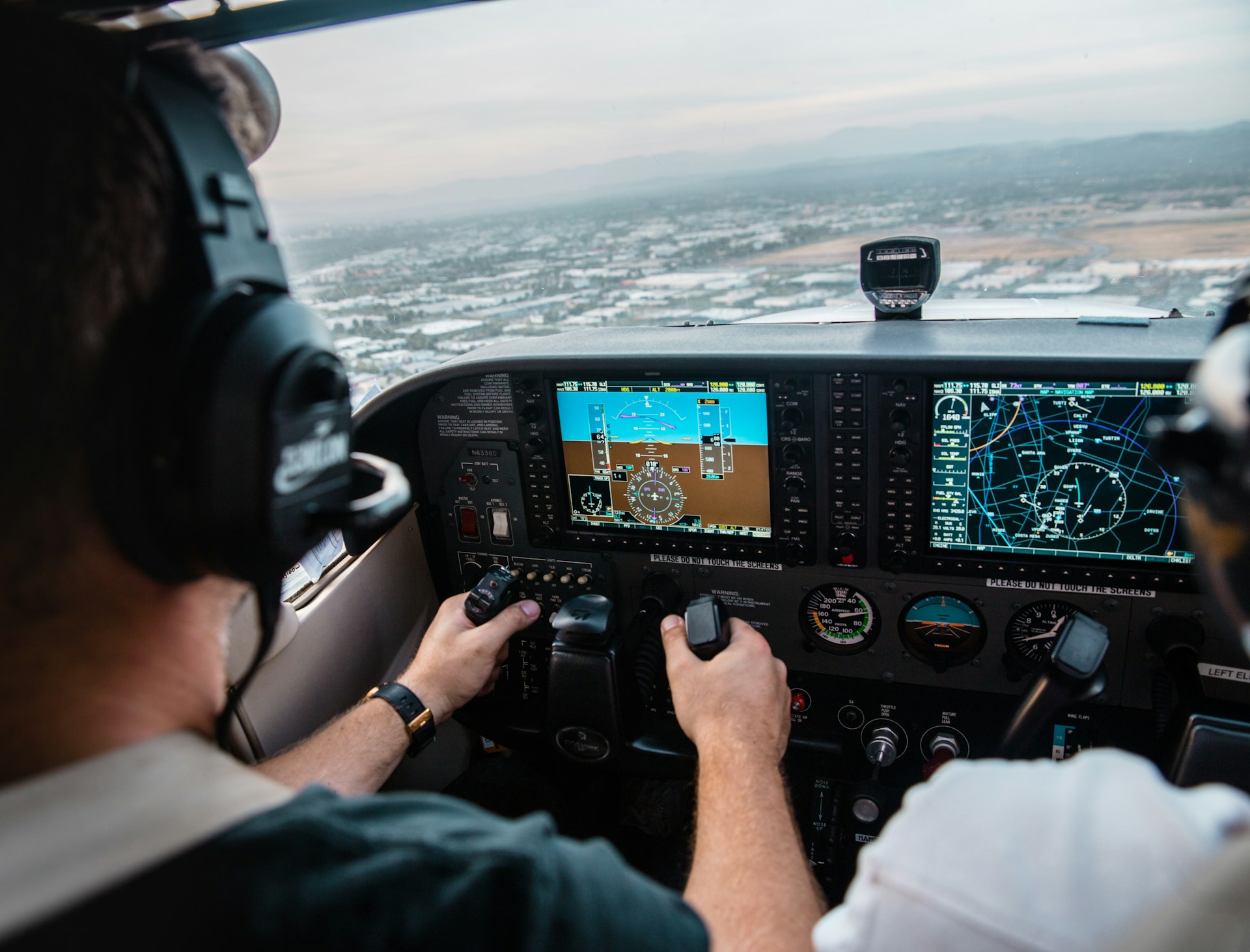
Read below to learn more about the things that stop most student pilots from finishing their training and how to keep your head in the game.
Flight training requires a whole lot of passion and heart, without which students may not be able to make it to the proverbial finish line where they get their licence.
Some students who begin flight training may lose interest during the more mundane parts of the training, like ground training, while others may be burnt out from all the training and quit.
There are several reasons why some students may quit midway, which likely costs not just a lot of time but also money.
Read below to learn more about the things that stop most student pilots from finishing their training and how to keep your head in the game.
Top Reasons Why Student Pilots Stop During Training (And How to Avoid Them)
Here are the most noteworthy reasons why student pilots may stop training midway or be mentally exhausted:
Budget Problems
Budgeting is extremely important in flight training. Since aviation is an expensive endeavour with very high fixed and capital costs, flight schools push some of these costs onto the students and pilots.
This increases the overall tuition and training costs associated with flight training, which can prove to be a burden for many people.
While budgeting flight training expenses and going for monetary incentives is the way to go, some unforeseen circumstances can cause students to run out of money during training.
The truth is, while there are minimum requirements for flight training, no one is ever satisfied with just completing the minimum hours and flying an aircraft. In reality, it takes 30 to 50% more training hours over the minimum to be considered flight-ready.
These extra training costs, exam fees, lessons, landing fees, and aircraft hire can significantly push the final price of flight training.
Thankfully, there are a few ways to avoid this problem:
- Always budget for more than the minimum hours before enrolling
- Keep a contingency fund for additional training and set aside some funds every month
- Consider spreading training costs monthly rather than paying the full fee upfront.
Financial planning is an important skill that pilots must develop at an early level because it will also come in handy when they plan flights in the future.
Taking Gaps
Learning to fly requires students to improve their flight skills through practice.
Practice is the one thing that will make you better at flying. Since aviation is an experience-based field, there is no way to get better at flying than by getting into the cockpit and logging flight hours.
This is why if you take long gaps between sessions, you can slow down progress significantly. This is especially true for struggling students who need constant training to grasp concepts. If several weeks pass between sessions, then students often spend time revising old skills instead of learning new manoeuvres or topics.
The best way to avoid these problems is to aim to fly at least once every 1- 2 weeks. This way, you can maintain momentum during early training and schedule lessons in advance as well.
You can also join study groups to stay motivated and make a personal commitment to always give time to flight training. Consider it an investment that you need to take care of every day.
Rescheduling
We get it, cancellations and rescheduling sucks, especially if you are looking forward to flying.
It can kill the mood and even demotivate students, especially if they face regular cancellations due to bad weather, aircraft problems, or timing clashes.
The weather is a particularly common reason for cancellation. The UK’s weather is famously unpredictable, with strong winds, low clouds, and poor visibility showing up out of nowhere.
If there are a lot of cancellations, then students may become demotivated and lose interest in flight training.
A great way to combat this is to focus on ground school training and simulator hours when grounded.
Even if you don’t fly, why waste your time and money? Being grounded is an excellent opportunity for pilots to get ahead of their ground school training and prepare for their aviation exams.
By using this strategy, you can easily get through the theoretical section of your training, and when conditions are favourable, you will be able to enjoy practical flight training without taking on additional exam stress.
Motivation Problems
Motivation is tricky to deal with because it stems from internal issues that students may go through.
Sometimes students may become demotivated when they feel that others are progressing more quickly than they are, or they might start to lose interest when they are paired with uninspiring instructors who make aviation training dry.
Other times, students may just become used to the thrills of aviation, and the quick high that they experienced at the start may begin to fade.
To combat motivation problems:
- Celebrate small milestones and take each day one at a time.
- Track your progress in a training log and share your progress with friends and family.
- Remember why you started to fly in the first place and try to keep that spark ignited!
If anything, you should also consider the financial loss that you may face if you quit at the start. We recommend students find reasons to stay motivated and keep pushing through until they feel self-motivated.
Picking the Wrong School
Sometimes students just quit because they become disillusioned due to bad teachers. This is a serious problem and one that requires immediate attention.
If you feel that you are not learning enough or the teachers aren’t paying enough attention, then you must convey your grievances to the school's administrators. Keep in mind that the training environment plays a huge role in how soon you complete your licence.
To avoid this problem:
- Always visit the school before committing to a flight programme
- Talk to current students and alumni to gain insight into the school
- Ensure that both aircraft and instructors are consistently available
- Look for online reviews and video logs by students/pilots at the school
- Physical and Mental Challenges
Flight training requires pilots to be mentally and physically fit. Without both mental and physical training, you will not be able to complete training, let alone fly an aircraft!
Let’s discuss mental burnout first.
Burnout is a real problem for pilots because it can cause them to lose interest and become demotivated early on. If you are not used to challenging environments where you are pushed mentally and physically, it can take a toll on your mental health.
This is when burnout starts to creep in. Keep in mind that burnout happens slowly over time, so you might not even feel its effects until it is too late.
This is why students and pilots are advised to take things slowly and try to figure out ways that reduce stress while training.
This can be done by talking to instructors, sharing your training challenges, and forming study groups that help you stay motivated.
Pilots are also advised to keep themselves busy with training and networking. Talking to like-minded people is one of the best ways to decompress and refresh your mind. Remember, if you focus only on training day in and day out, you will likely start to feel pressure that may result in disastrous consequences like quitting.
Handling stress is not just advised, but it is also a requirement for pilots. When you meet an experienced pilot, you will notice their calm demeanour and strategic thinking skills. They are composed, calm, and collected. These qualities can be found in almost every commercial pilot because their job requires them to be the best versions of themselves.
By coming up with destressing strategies early on, you can be in a better position in the future since you will be able to handle and process stress efficiently.
Physical challenges are also real! However, these are rather easier to overcome than mental challenges. Pilots are recommended to take time for physical training. Being physically fit also plays into your mental health. This is why we recommend that you exercise every day, walk whenever you can, and even while studying, try to get up every 15 minutes to remain active.
These small changes can significantly boost your physical health and help you get through the gruelling practical training sessions.
ATC Challenges
Air Traffic Control (ATC) control the skies from the ground. They are a team of professionals who have an eye on everything. They look out for routes, aircraft paths, weather conditions, airspaces, and more.
ATC is responsible for both in-air and grounded aircraft. This is why communicating with ground personnel is extremely important, especially for student pilots.
If you struggle with jargon-filled communication, then you might get demotivated very quickly. Aviators use shorthand language to convey important information. Remember, when you’re flying, you aren’t looking for long conversations! You instead convey information concisely and precisely for maximum effectiveness and safety.
To combat this issue, all you need to do is focus a bit more on ground training, especially for communication subjects. You can also adopt shorthand language when communicating with your peers at the school. This way, you can practically use jargon and become accustomed to it.
If you want to dive even deeper into communication skills, then you can even opt for radiotelephony courses. Top-class aero clubs, like Sherburn, offer dedicated FRTOL (Flight Radiotelephony) courses that can help student pilots achieve the highest standards of aviation and radio communication.
Landing Challenges (Crosswind, Runway Difficulties)
Most students find taking off easier than landing. Landing involves you hitting your mark every time, no matter what, which is why some students find it daunting.
Aircraft landing isn’t as straightforward as you might think, too! There is a lot that goes into perfect landings. This includes accounting for variables such as crosswind.
Crosswinds are challenging for students to master and can discourage them from training. To overcome these challenges, student pilots are required to study aerodynamics and meteorology, and practise descent manoeuvres on simulators and during flight.
Landing exercises may seem daunting, but with the right mindset and instructor guidance, you can master crosswinds and general landings with ease.
Make sure that you share all your concerns with your instructors. They will help you figure out the best way to proceed with your training and highlight ground and practical training content that can help you land with confidence.
In-Flight Emergencies
Emergencies are a part of aviation. Sadly, even with modern technologies and protocols, we are still at the behest of several variables when flying.
Even then, humanity has made air travel one of the safest forms of flying, which is a testament to its ingenuity. This fact alone should be extremely motivating for students who are afraid of dealing with emergencies during flights.
The truth is, you are bound to face in-flight emergencies at some point in your career or training. Emergencies vary in nature and can range from medical to mechanical, and even environmental emergencies.
These emergencies are typically grounds for grounding the aeroplane, which means that you may have to perform emergency descents.
We get it, all of this is stressful! But it is part of the package when you train to become a pilot. A great way to overcome this challenge is to talk to instructors who have had various emergencies in their careers. Watch videos of professional and retired pilots who share how they overcame adversity.
We also recommend attending workshops and seminars where pilots share their concerns and learn how to overcome various obstacles when faced with adversity during flights. By continuously exposing yourself to information and strategies for avoiding emergencies, you will be better able to deal with them when you eventually do face them during your aviation journey.
Why Choose Sherburn Aero Club?
Sherburn Aero Club, which has been operational since 1964, is the ideal place for most of your training and flying needs. It is one of the largest flying clubs in the North of England and also one of the largest in the country.
If you wish to begin your career in aviation or wish to take to the skies as a hobby, Sherburn’s flight training school offers private and commercial licences, along with pilot medicals to ensure a smooth journey going forward.
For those who wish to experience the thrill of a flight for fun or to help fuel their aviation dreams, Sherburn offers experience flights for the newbie, as well as the veteran, in various types of light aircraft.
The flight experience option is also available for people who wish to take to the skies for special occasions, even if they aren’t into aviation in the long run.
With a large fleet of new aircraft and an airfield refurbishment with new runways, hangars, and an extended clubhouse, we cater to brand-new flyers who have just started their journey to the skies, as well as seasoned flyers who have been operating aircraft for decades.
Sherburn offers a dedicated day-long Flight Radiotelephony Operator’s Licence (FRTOL) course for those wishing to get the certification, running on the first Sunday of every month.
In addition to that, if you are looking for a hangarage for your own aircraft, need servicing or repairs, want to buy a new aircraft or aviation equipment, or are just looking to enjoy and watch the aircraft, Sherburn Aero Club is the place to be.
Call us at 01977 682 674, email us at flightdesk@sherburnaeroclub.com, or message us via our online contact form for more information on what stops most student pilots from finishing their training, and how to avoid it.
Photo by Kristopher Allison on Unsplash